Introduction
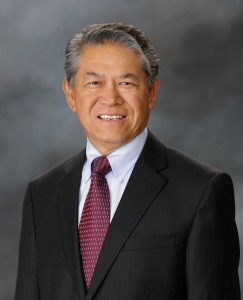 Foreword
The IEEE is facing a challenging new business environment where newer and faster delivery channels are emerging (information distribution channels to new technology media) and access to IEEE tradition for-fee subscription publications are under pressures to be available for no-fee open access libraries. Our member’s needs are changing as the pressures to keep current on emerging career skills will drive the need for more continued professional education content. Future jobs will require more cross-disciplinary skills and IEEE will have to change its disciplinary specific silo organizational approach to a multi-disciplinary business model.
We need to change our business strategies and to begin investing in new innovative products and services and to organize ourselves to be more responsive and agile in our decision making. Just as importantly, we will need to streamline our business expenses and make our internal organization more efficient.
As Technical Activities Board Vice President, I will develop an innovative plan for our future. My hands on knowledge of many of the IEEE technical activities and financial operations along with my business executive strategic planning experience gives me a strong background to work with other volunteers and staff to develop a vibrant and strong strategic plan. We will need to be nimble and creative in our efforts. I will involve all societies, TAB Board, regional chapters and sections, and IEEE staff and use our collective ideas to develop a plan that will address our emerging business challenges.
I provided a short summary of my IEEE activities and background in this introductory page. More details can be found in the attached website pages. I hope that the website will give you an insight into my accomplishments and background.
Best regards,
Roger.
IEEE Volunteer Activities
I have been involved in the full range of IEEE activities including IEEE and TAB leadership positions, Computer Society President leadership, key IEEE/TAB committees, and grass roots level involvement in publications, conferences, standards, and education/professional training. During my IEEE and TAB leadership roles, I promoted and supported the new funding initiatives to help the grass roots volunteers create new products and worked to streamline the governance rules to help volunteers eliminate unnecessary administrative paperwork.
IEEE and TAB Leadership Roles
I learned how funds are allocated and approved for new initiatives. I plan to use this knowledge to get more new initiatives for Societies and Councils funded/approved to help volunteers create new product and service ideas. My leadership roles involved the following:
- IEEE Board of Directors (Division VIII Director)
- TAB Board of Directors (Division Director and President’s Forum)
- IEEE Foundation Board of Directors (currently serving)
- IEEE USA Board of Directors
Society Leadership Roles
As Computer Society President, I was involved with IEEE staff in developing the fiscal budget for our 32 award winning magazines/journals, 250 conferences, 300+ standards development, and professional education outreach products. My other roles included:
- Computer Society 1stVice President
- Computer Society Vice President of the Standards Activity Board
- Computer Society Board of Governors.
I also emphasized the Computer Society’s relationship with our global partners in China, Japan and India. I conducted membership outreach activities at our global sister society conferences:
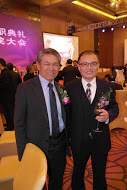
- China Computer Federation (Flagship Conference – Beijing)
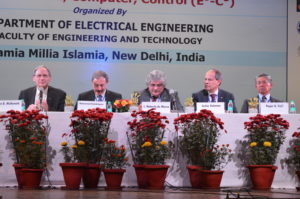
- India Computer Society (Flagship Conference – Indicon @ New Dehli)
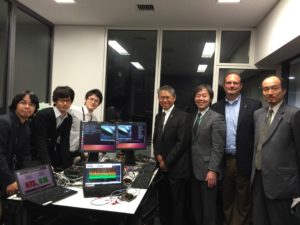
- Information Processing Society of Japan – (Flagship conference – Tokyo)
The three pictures below are from the China Computer Federation conference, Indicon Conference, and IPSJ Conference.
Key IEEE/TAB Committees
I have been developed a detailed understanding of IEEE and TAB Operations by my involvement in a wide variety of key committees. Most recently, I contribute to the analysis of IEEE financial reports (committees noted by *) to make the reports more transparent and usable by societies/councils. In addition to the financial transparency work, I contributed to the definition of a proposed IEEE organizational model (Shared Service Center Model) which would allow societies/councils to be charged only for those services the society/council required. The financial transparency and new organizational model would return more revenues to each society/council for their investment in new products/services for members. My recent committee involvement include:
- TAB Finance Committee *
- IEEE/TAB Financial Transparency Committee *
- IEEE Finance Committee Ad Hoc: Defining Changes to the 30% Allocation of Indirect/Infrastructure Expenses *
- TAB Ad Hoc Committee on Considerations of A Shared Service Center Organizational Model *
- IEEE Ad Hoc Committee on Publications (Open Access Impact) *
- TAB Conflict Resolution Committee
- IEEE Ad Hoc Committee on Defining Roles/Responsibilities of IEEE President/ED/BOD
- IEEE Employee Benefits and Compensation Committee
- IEEE Fellows Committee
- TAB Committee on Standards Activities
Grass Roots Involvement in Technical Activities
My first activities were in standards development and conference program committees. Since my early grass-roots involvement, I have served in leadership roles in a wide range of IEEE technical activities including publications, conferences, standards, awards, governance and strategic planning. Highlights of my activities and accomplishments are listed below. A detailed list of my IEEE and society activities are provided in the IEEE leadership, IEEE TAB, and society tab.
-
- Publications – Book Program Publishing: Working with CS staff, I helped to reinvigorate the CS book publishing by establishing an alliance with John Wiley Publishing. This created a new outlet for CS book authors giving them access and distribution channels in the Wiley book network.
-
- Publications – Guest Editor Software Magazine: I was the guest editor of Software magazine’s special issue on the subject of Software Verification and Validation.
-
- Standards – Unifying United States Standards: As the United States ISO/IEC JTC1/SC7 head of delegation, I worked with standards development organizations (e.g., Department of Defense, Nuclear Regulatory Agency) to agree to adopt IEEE and ISO/IEC standards as the common baseline standards rather than continuing the practice of each industry having its own unique standards.
-
- Standards – Cloud Computing: As Vice President of the Standards Activity Board, I worked with the board members to obtain approval for Cloud Computing to be a standards development committee with the charter to generate the future standards in the Cloud Computing field.
-
- Standards – IEEE Std 1012 Wide Use:
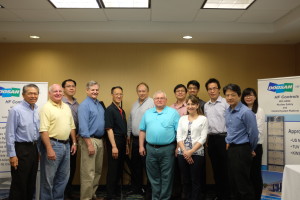 As chair of IEEE Std 1012 (System and Software Verification and Validation), I promoted the standard to be the most widely used standard to certify critical software systems such as nuclear power controls, NASA manned space flight, medical life-sustaining devices, aviation control and airspace management, and large-scale software systems for state/local governments (e.g., welfare, motor vehicle registration). The picture is the IEEE Std 1012 working group meeting held in Dallas, TX (Doosan Industries – host), May 2014.
- Standards – IEEE Std 1012 Wide Use:

-
- Strategic Planning – 2019 TAB Chair for Goals and 2010 Computer Society Chair of Strategic Plan: I am the current chair of the TAB Ad Hoc committee developing the near/long term goals for the 2019 TAB Strategic Plan. As chair of the 2010 Strategic Plan (SP7), I led the development of the Computer Society’s Strategic Plan and worked with CS staff to modify our new initiative funding process to link our funding requests to the strategic plan objectives.
Academic Teaching
Because of my background in developing large-scale, critical software systems, I have been asked to lecture on software engineering principles for the development of large, trusted and reliable systems. While my primary job was working in industry, I enjoyed my teaching experience, especially in the interaction with the students – our future computing technologists.
-
- Xiamen University (Guest Professor):
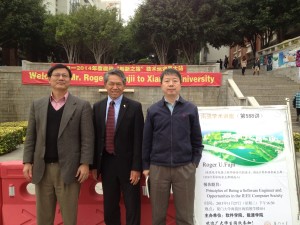 I currently lecture in the field of nuclear engineering with a specific focus on how to build safe and reliable nuclear power instrumentation and control systems.
- Xiamen University (Guest Professor):

-
- UCLA and California State University, Sacramento (Lecturer): In the past, I lectured in the continuing professional education program and computer science graduate program on software engineering principles and software standards.
Fields of Research
In my graduate studies and in my professional career, I conducted research into the following fields of interest.
-
- Pattern Recognition and Artificial Intelligence: Based on Prof K. S. Fu’s work in “Sequential Pattern Recognition and Machine Intelligence,” I completed my graduate research thesis on “Suboptimal Sequential Pattern Recognition of Handprinted English Letters”.
-
- Program Proof of Correctness: Based on the work of Prof W.E. Howden, I investigated the use of Formal Proof of Correctness techniques to certify critical software systems. I evolved working model of formal proof of correctness that could be applied to missile software programs.
-
- Interoperability Communication Model: Taking the standard communication protocols
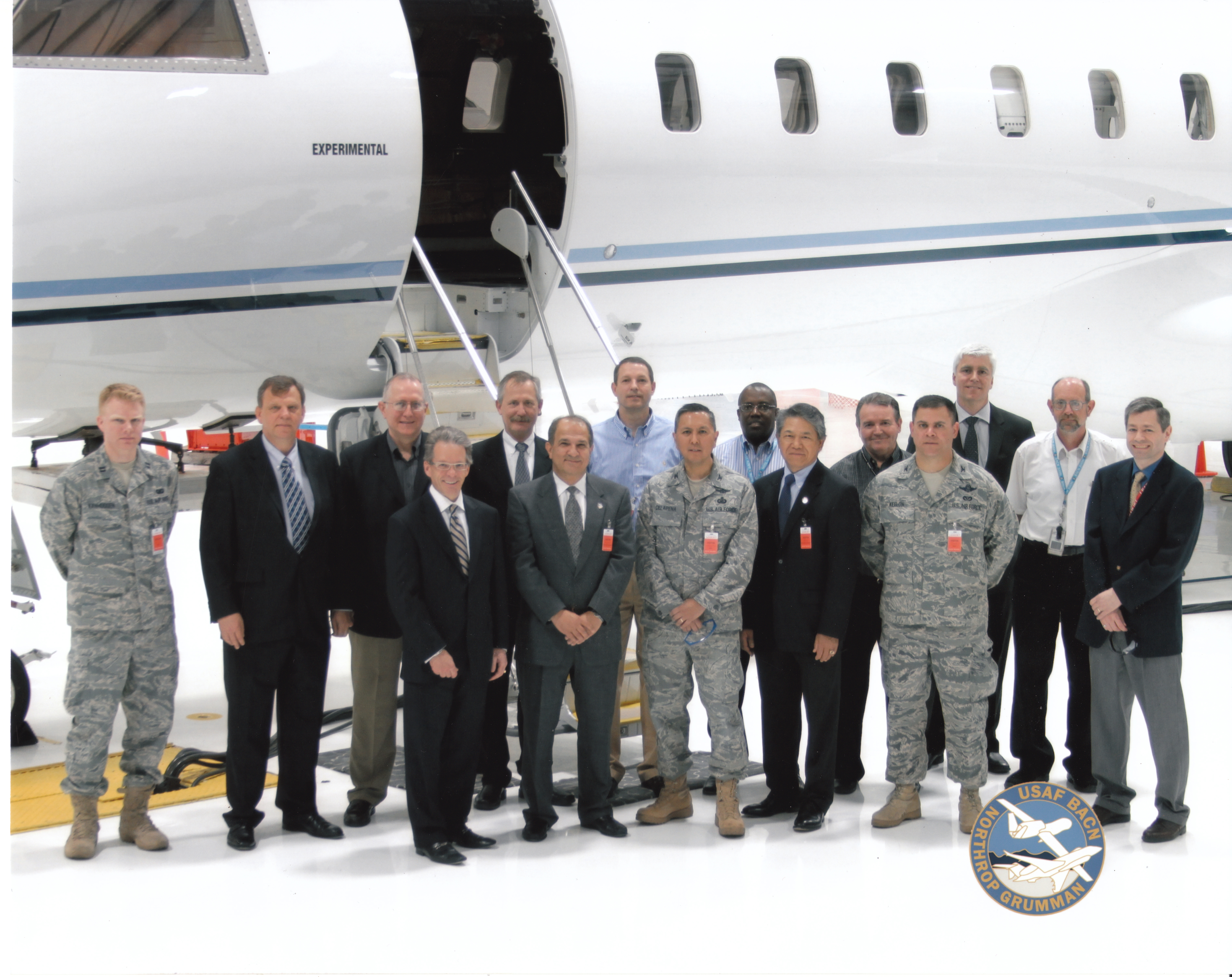
for different and disparate military and commercial devices including satellite communication protocols, I and my industry team experimented with different solutions and finally settled on a communication translation and gateway control system approach. This system allowed different communication systems to automatically and seamlessly link together as a communication network. Our systems engineering research and resulting hardware/software system was recognized for the 2010 Daedalian Award for Systems Excellence from the Fraternity of Military Pilots and also was selected as a finalist for Aviation Week magazine’s 2011 Laureate Award.
- Interoperability Communication Model: Taking the standard communication protocols
Professional Experience
I retired as a senior executive in the aerospace industry. I was involved in designing and developing large-scale, critical software systems for military and industrial applications. To build these systems, my team and I conducted research into communication and networking theories. By combining different communication and network theories and adding our own theories, we were able to design new communication devices and battlefield networks for our military and industrial users. For more details on my background, see my Curriculum Vitae page in this website.
-
- Fujii Systems, Inc: Currently, I am President of Fujii Systems, Inc in which I provide executive services to major corporations on developing trusted systems.
-
- Northrop Grumman: Previously, I was Vice President (retired) of Northrop Grumman’s Network Communication Division. I was responsible for 2,200 employees, over 60 major projects generating over $1.086B annual revenue, and management of a $12-24M research and development budget. My division was responsible for the design and manufacturing of the F22/F35 communication and navigation device. We used Six Sigma and Lean manufacturing processes to control our quality and improve our production yields. We also developed military communication network systems – one that I mentioned in the research project in the paragraph above. These military communication network systems allowed users in difficult terrains to be in constant communication contact with each other. Using IEEE Std 1012, I certified the critical software systems for the United States Air Force and Navy nuclear weapon systems.
Honors and Awards
I received the following key awards. For a full list of my honors and awards, see Awards and Publications page on this website.
-
- IEEE Fellow
- IEEE Computer Society Golden Core Award
- IEEE Meritorious Service and Outstanding Contribution Award
- Chinese Institute of Engineers (CIE) 2010 Executive of the Year Award
Academic Education
I received my BS/MS in Electrical Engineering/Computer Science from the University of California, Berkeley. I also received several management of business administration program certificates from Harvard, UCLA John Anderson School of Business, and Darden (University of Virginia).