Curriculum Vitae
Current Position:
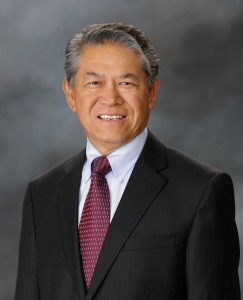
Roger Fujii is President of Fujii Systems, Inc. that specializes in providing senior advisory services to large corporations in the development of trusted systems.
Teaching Position:
Fujii has lectured at UCLA in the continuing professional education program on software engineering principles and at California State University, Sacramento in the computer science graduate program on software engineering and software verification and validation.
He was a Guest Professor at Xiamen University, Xiamen, China. He lectured on nuclear engineering with emphasis on how to develop safe and secure nuclear power instrumentation and control systems.
IEEE Experience
Grass Roots Volunteer
I started my 30+ IEEE volunteer career by getting involved in the technical activities of standards, conferences, publications, awards, education/training and membership. This early experience gave me a detailed understanding of the issues and concerns of the volunteers working the details of TAB activities at the grassroots level. My volunteer efforts evolved from just a technical involvement and grew to greater levels of responsibility. My volunteer roles in technical and membership efforts are as follows:
-
- Publications: Guest Editor of Software magazine, paper author and reviewer. Computer Society Press Operations Chair overseeing aspects of publishing from conferences and Computer Society Book Program with Wiley Press (now transitioned to the IEEE Wiley Book Program under the IEEE Publications organization)
- Conference: Program chair, panel session chair, and presenter
- Standards: Standards Working Group Chair (IEEE Std 1012 – System, Software and Hardware Verification and Validation), USA Head of Delegation ISO/IEC JTC1/SC7 International Software Engineering Standards, and TAB Standards Activity Committee
- Membership: Computer Society New Membership Model Ad Hoc Committee (member)
- Awards: Hans Karlsson Standards Award Committee (Chair), Richard E. Merlin Award Committee (member), IEEE Fellows Committee
- Education/Training: IEEE Corporate Affiliate Program (Northrop Grumman), IEEE Special Strategy Subcommittee on Continuing Professional Education
IEEE Leadership Roles
In my IEEE leadership roles, I developed an understanding of the different views of regional directors, division directors, society presidents, and IEEE staff. I am now better able to create solutions that account for the different needs and considerations of all these important constituent viewpoints. I learned how to navigate new initiatives and motions through the IEEE governance process. Most importantly, I heard the issues and problems facing our volunteers and members which I can use to develop effective new strategies to take on the business challenges facing IEEE.
-
- IEEE Board of Directors (2012-2014)
- IEEE TAB Board of Directors (2012-2014, 2016)
- IEEE USA Board of Directors (2017)
- IEEE Foundation Board of Directors (2015-current)
- IEEE Computer Society President (Elect – 2015, President – 2016, Past – 2017)
Key Committee Involvement
Recently, I worked on IEEE committees and ad hoc that addressed the problem of the growing IEEE indirect and infrastructure expenses that are over-taxing the society revenues. The complexities of the IEEE are driven by the lack of full financial transparency in the accounting system, a heavy governance dominated organization structure and a large and cumbersome legal/IT compliance structure having to serve different world rules. The ad hoc and full IEEE committees that I served on have developed some viable solutions. These key committees and my involvement are listed in the following:
-
- TAB Finance Committee (member): Worked with societies/councils to achieve target financial budgets while funding critical research initiatives that pursue new products and services.
- Financial Transparency Group (chair): This group surfaced the issue of the growing IEEE indirect and infrastructure expenses that were growing faster than our revenue growth thus returning few revenue dollars to societies/councils to pursue new initiatives. Two motions directing more detailed and accurate accounting of indirect/infrastructure expenses and development of a more equitable expenses allocation algorithm resulted in actions being taken by the IEEE Finance Committee.
- Allocation Algorithm (30% Rule) Subcommittee (member): Identified moving indirect charges to the users of the IEEE services (rather than allocated to all societies) and determined a more equitable indirect/infrastructure allocation algorithm resulting in an initial allocation of 17% to societies/councils. Implementation is planned for the 2021 budget year.
- New IEEE Service Organizational Model (chair): Showed how a shared service center (SSC) model that charged only those societies/councils using the service (rather than every society/council receiving a portion of the expenses) would create a more effective and less costly organizational model. Elements of this new organizational model will begin implementation in 2019.
Industry Position:
Roger Fujii was a Vice President and General Manager for Northrop Grumman (retired) in charge of a research-oriented engineering product division (Network Communication Systems Division). In this role, he was responsible for the organization’s financial, contractual, and program management performance of a $1.086B division. Headquartered in San Diego, California, his division also had employees at major offices in Orlando (Florida), Los Angeles (California), Dayton (Ohio), and Colorado Springs (Colorado). As Vice President and General Manager of the Division, he managed the largest business unit with responsibility to:
-
- Conduct research with an annual budget of $12-24M to generate new ideas for the next generation of communication products,
- Manage over 2,200 employees including decision authority on employee salary compensation, training, and educational advancement,
- Manage over 60 contracts (firm fixed price, cost plus fixed fee, and time and materials) for a diverse customer base, and
- Control business administration expenses and market development funds.
Fujii’s division was responsible for the design, development, manufacture, and integration of large-scale hardware/software systems. A key organization capability required to ensure high quality engineering results was to be in total compliance with the Software Engineering Institute (Carnegie Mellon) Capability Maturity Model Integrated (CMMI) processes. Fujii worked with his program staff to engrain the CMMI processes to each of the engineering and computer technology staff of his division. His division was audited by CMMI compliance experts and was awarded the highest CMMI Performance Level – Level 5.
Descriptions of the key programs developed by the division are described in the following paragraphs.
F22/F35 Communication/Navigation/Identification Friend-Foe (CNI)
Fujii’s division designed, developed, manufactured, and integrated the CNI devices for the F22 and F35 advanced military aircraft. The CNI devices were innovative and unique in that the solution combined the three separate functions of communications, navigation, and identification of friend-foe functions into a single unified program where the program senses pilot actions and directs the computation resources to the appropriate functions to execute pilot actions (communication links, landing, combat). The solution required years of detailed research especially on the implementation of context switching. One of the keys to successful implementation was the availability of fast context switching processors (advances in computational speeds as predicted by Moore’s Law). His organization used Six Sigma and Lean manufacturing processes to control manufacturing quality and improve production yields.
Battlefield Airborne Communication Node (BACN)
BACN was an innovative system that connects different communication systems (cellular, satellite, aviation and naval data links, ground radios and networks) into one seamless communication network automatically without any user inputs. By investing R&D funds to research communication translation and gateway technologies, Fujii’s division developed a hardware/software system that could automatically unify the battlefield communications networks into one unified operational network without physically modifying any network in the operational constellation. The unique communication solution earned BACN the prestigious Daedalion Award (2010) from the fraternal order of military pilots. BACN also was a finalist in Aviation Week magazine’s Laureate Award for Systems Excellence.
Satellite Power Management System
Fujii’s division designed, developed and deployed a system for monitoring and controlling the power consumption of satellite systems by automatically switching the satellite system to the most efficient power usage mode. Using the CMMI software development processes, Fujii’s development team delivered the complex system within the projected program development schedule.
Signal Jammer Technology
Fujii’s division developed a prototype of the latest “software defined radio” in which the software defined radio was capable of transmission/reception of different radio waveforms using the different software radio waveforms stored in the radio processor. This new technology involving over $20M in R&D funds was found to be effective in countering the battlefield threats created by Improvised Explosive Devices (IEDs) that were being remotely triggered by different radio frequencies. Fujii’s division won a research contract to develop and field test the prototype of a jammer system using the “software defined radio” technology.
Battlefield Network Management System
Fujii’s division designed, developed, and integrated the United States ground forces terrestrial communication network that could automatically authenticate new users and dynamically link all users into the communication network. By coupling this system with the Northrop Grumman developed “Blue Force Tracking System”, the exact location of all friendly forces could be precisely pin-pointed and thus avoiding friendly fire incidents. This complex system involved the development of over 3 million lines of code following the software CMMI process model.
Joint Mission Planning System (JMPS)
This mission planning system was used to plan military aircraft routes to and from a defined destination. Commercial airlines today use a similar software system to plan commercial flight routes to avoid weather conditions and to pick alternate routes to avoid commercial airline traffic congestion areas. JMPS was unique in that this was the first military in-flight system to utilize PC computing technology and third party commercial software packages rather than using specialized military computing systems. Fujii’s division invested research along with Microsoft to develop a true “plug and play” architecture for using third party specialized mission planning applications. JMPS used the COM/DCOM interface protocol so that any commercial application software following this plug and play interface protocol could now be used by the military. Third-party software included the latest GPS mapping systems, user friendly symbol displays, real-time air traffic control information, and GPS terrain data. The JMPS software was an important milestone in the use of third-party commercial software to be integrated into embedded military systems that required reliability and safety/security.
Certification of Military Nuclear Weapon Software Systems
Fujii is a nationally recognized expert in system and software verification and validation (V&V) and software safety analysis. He originated the software nuclear safety methodology currently being used to certify all United State intercontinental ballistic missile and cruise missile nuclear software systems. This methodology is codified in IEEE Software Engineering Standard 1012, System and Software Verification and Validation. Fujii managed the software nuclear certification of more than 25 Air Force and Navy software nuclear weapon systems for Minuteman, Peacekeeper, ground-launch Tomahawk cruise missile, battleship armored box launched Tomahawk cruise missile, and Los Angeles Class Fast Attack Submarine Tomahawk cruise missile.
The successful application of the system and software verification and validation methodology has been adopted by other systems with critical application such as the nuclear power systems (Nuclear Regulatory Agency), NASA manned space flight systems, radiation therapy devices (Federal Drug Administration), air traffic control systems (Federal Aviation Administration), and other large-scale software development systems.
Education:
Fujii has a BS/MS in Electrical Engineering/Computer Science from the University of California, Berkeley. His graduate research was in the field of pattern recognition and artificial intelligence based upon the work of Prof K. S. Fu. His thesis was titled “Suboptimal Sequential Pattern Recognition of Handprinted English Letters.”
Fujii also has Management of Business Administration program certificates from the Harvard School of Business Management, UCLA John E. Anderson School of Business Management, and Darden School of Management (University of Virginia).
Publications/Books
Fujii has published at numerous conferences and has been an contributing book author of several books. A list of his most recent publications and books contributions is contained on the website page titled Awards and Technical Publications.